HAPPY BIRTHDAY, SAL
October 25, 1902
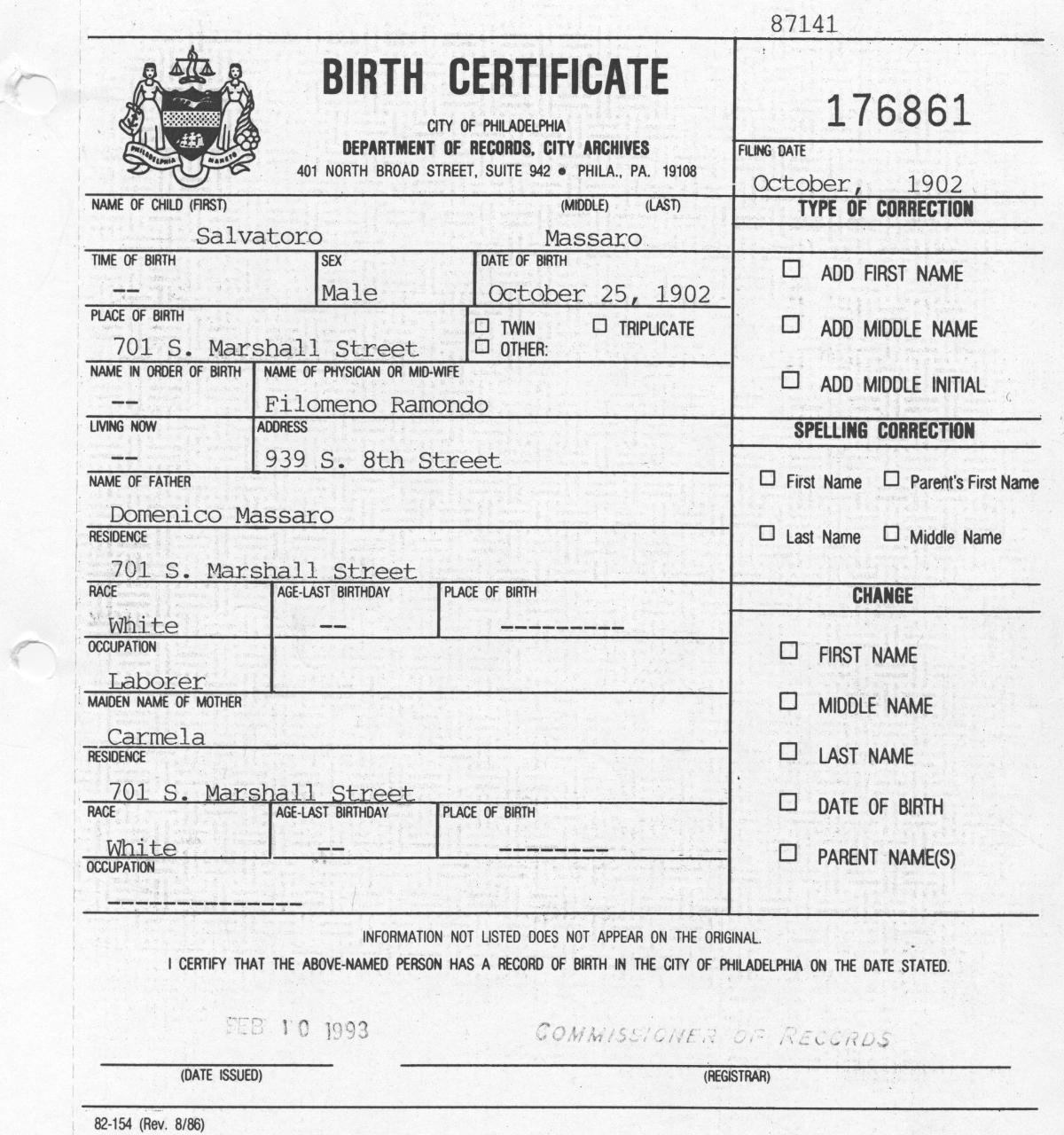
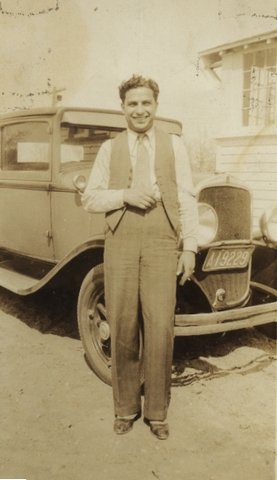
Eddie Lang, born Salvatore Massaro on October 25, 1902, in South Philadelphia, Pennsylvania, was a pioneering jazz and urban blues guitar virtuoso. He revolutionized the way we perceive the guitar, employing it as both an accompaniment and a solo instrument while showcasing extraordinary technical, harmonic, and rhythmic mastery. Lang is credited with creating the modern guitar method in the 1920s, a technique that remains foundational for guitarists today. Every pop, jazz, blues, and country guitarist owes a profound debt to Eddie Lang, whose innovations opened the door to endless possibilities in music.
Throughout his short life, Lang gave the guitar a distinctive voice in jazz, blues, and popular music, elevating its status in films, records, radio, and stage performances. He played a vital role in bringing the guitar to the forefront of music, effectively displacing the banjo. Widely regarded as the leading pop and jazz guitarist of his era, he became a highly sought-after studio and broadcast session musician. Lang amassed an impressive catalog of over 400 jazz, pop, and blues sessions, many of which are considered essential recordings from the Jazz Age.
So, who in 2025, with today’s culture, will set the record straight that a twenty-two-year-old, white, Italian from South Philadelphia is the architect of jazz and urban blues guitar?
“It’s very fair to call Eddie Lang the father of jazz guitar.”
GEORGE VAN EPS
“The pioneer of the guitar, the greatest there ever was.”
JOE VENUTI
“There’s a lot of guitar players I like. There’s a guy called Eddie Lang.”
GEORGE HARRISON
“Eddie Lang was a superb player.”
STEPHANE GRAPPELLI
“Lang was one of the greatest musical geniuses we ever had in the band.”
PAUL WHITEMAN
“Eddie Lang could play guitar better than anyone I know.”
LONNIE JOHNSON
“Eddie Lang first elevated the guitar and made it artistic in Jazz.”
BARNEY KESSEL
“Eddie Lang was the first and had a very modern technique. I had to figure out what he was doing.”
LES PAUL
“In the opinion of all the guitar players of his day and many since, he was the greatest one of the craft who ever lived.”
BING CROSBY
VenutiLang.com commemorates the 123rd anniversary of Eddie Lang's birth, showcasing an exceptional performance (or two) from each year of his career.
1924
DEEP SECOND STREET BLUES
Wednesday, December 10, 1924, NYC.
Mound City Blue Blowers
Red McKenzie-comb, Dick Slevin-kazoo, Jack Bland-banjo, Eddie Lang-guitar.
14440 DEEP SECOND STREET BLUES (McCauley-McKenzie-Lange)-Brunswick 2804-B
RICHARD HADLOCK: A piece called DEEP SECOND STREET BLUES reveals that Lang had already fixed several aspects of his personal style and was well on the way toward establishing the guitar as an important band instrument as well. For one thing, Eddie, like comb player McKenzie, knew how to get inside a blues and express himself convincingly in this essentially Southern idiom. DEEP SECOND STREET BLUES, for all its emphasis upon novelty effects, is performed with genuine blues feeling, a feeling Lang apparently acquired quite easily and was never to lose, even on very commercial assignments. Deep Second Street Blues also has Lang playing rhythm in a manner that was highly personal and distinctly advanced for the time. His tendency was for an even four-to-the-bar pulse, often with a new chord position, inversion, or alteration on every stroke of the strings. In contrast to the monotonous chopping of most banjoists of the day, Eddie’s ensemble guitar sparkled with passing tones, chromatic sequences, and single-string fills. With all this went a firm, individual tone unlike the sound of any other instrument yet heard in jazz.
Richard Hadlock, Jazz Masters of the Twenties, Macmillan Publishing Co., Inc, 1965
NOTE: This is Eddie Lang’s first jazz session.
1925
BEST BLACK
June 3-7, 1925, London, England
Gilt-Edged Four
Julius Berkin-Trumpet, Al Starita-Alto Sax, Sid Bright-Piano, Eddie Lang-Guitar.
A 2171 BEST BLACK (Lang)-Columbia 3704
In his November 1972 article for Crescendo magazine titled “As I Was Playing …”, Harry Francis states that the Mound City Blue Blowers “recorded a couple of titles” while they were in London, England, during their engagement at the Piccadilly Hotel in the spring and summer of 1925. However, he was only partially correct. Eddie Lang actually recorded in the United Kingdom with a local group called the Gilt-Edged Four. Nick Dellow reveals the complete story in his outstanding account “Eddie Lang - The Formative Years 1902-1925 Part 1 & 2.”
NICK DELLOW: The Gilt-Edged Four was a British Columbia hot studio band led by American saxophonist Al Starita. It was formed not long after Al Starita left the Savoy Orpheans in early May 1925, shortly before he took up leadership of the resident band at the new Kit Cat Club in the Haymarket, London. Though the original recording ledgers for British Columbia are no longer in existence, by comparing the matrix number against those of other British Columbia sides of the same period, the Gilt-Edged Fours BEST BLACK can be determined with reasonable accuracy to have been recorded between June 3rd and June 7th, 1925.
The 32-bar guitar solo on the Gilt-Edged Fours BEST BLACK is stylistically and tonally a close match to the 32-bar guitar solo played by Eddie Lang on the Mound City Blue Blowers' earlier recording of the number, which was made at Vocalion's New York studio on January 26th, 1925, and issued on Vocalion 14978 as by McKenzie’s Candy Kids. In addition to the guitar solo itself, both recordings of BEST BLACK also include single-string counter melodies played in a similar style, with a distinctive descending phrase repeated several times. In the case of the Gilt-Edged Fours version, the counter melodies are played underneath the 32-bar alto sax and trumpet solos that are also a feature of the side. Lastly, the Gilt-Edged Fours version has a single-string one-bar break in the coda, featuring strongly emphasized blue notes.
BEST BLACK was Lang's own composition. Apart from the Vocalion version, the Gilt-Edged Fours interpretation is the only contemporary commercial recording of the number. Interestingly, the Columbia label of the Gilt-Edged Fours version gives the composer of BEST BLACK as Ed Lang, whereas the American Vocalion states (Frank) Carle and (Red) McKenzie, as does the entry in the Library of Congress file. The implication here is that the Gilt-Edged Four sourced the number directly from the composer.


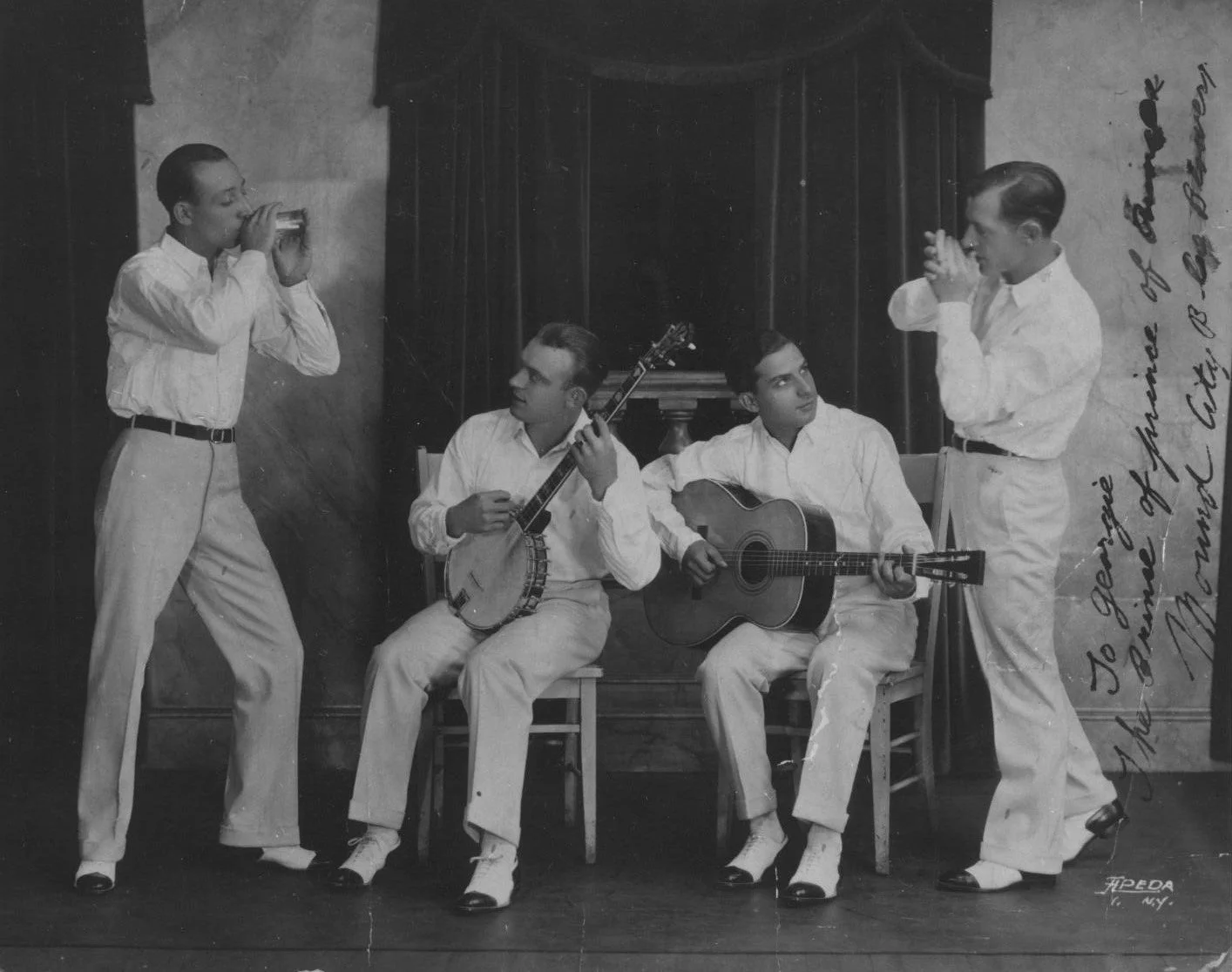
Mound City Blue Blowers (Lang in the foreground) @ St James Park, London, England, c. May 1925.
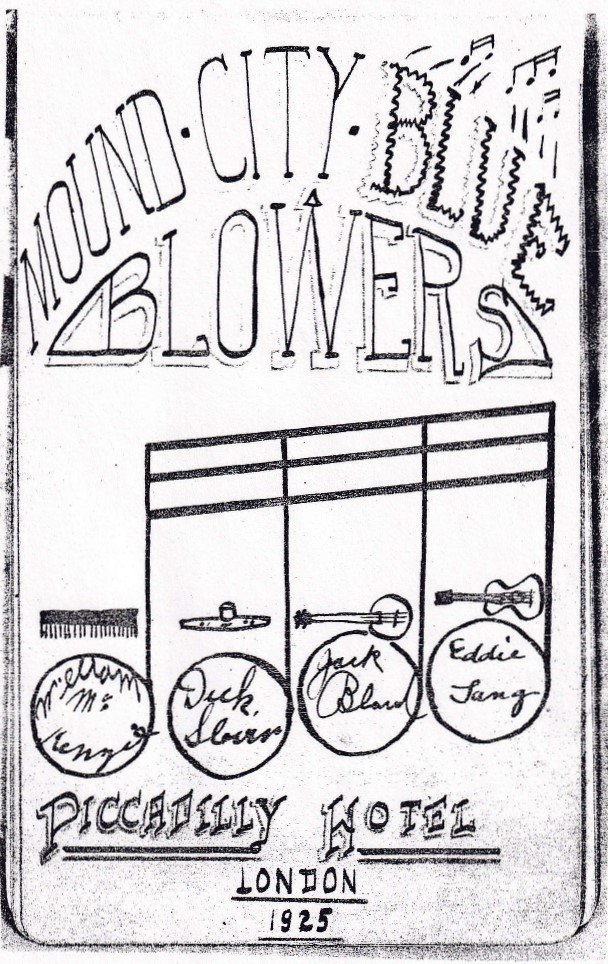
Joe Tarto’s sketch with Mound City Blue Blowers autographs from his autograph book, London, England, c. May 1925.
1926
NO MORE WORRYIN’
I’D RATHER BE THE GIRL IN YOUR ARMS
Wednesday, March 24, 1926, NYC.
Ross Gorman and His Earl Carroll Orchestra
W141860-1,3 NO MORE WORRYIN’ (Kahn-Donaldson-Mills)-Columbia 615-D
W1641861-2,3 I’D RATHER BE THE GIRL IN YOUR ARMS (Thompson-Archer)-Columbia 615-D
Fifteen years before Benny Goodman premiered SOLO FLIGHT (Columbia Records, March 4, 1941), featuring the amplified guitar of Charlie Christian, Lang was showcased in 1926 on both sides of a 78 RPM record. NO MORE WORRYIN’ and I’D RATHER BE THE GIRL IN YOUR ARMS are the very first “solo flights” in pop and jazz recordings featuring a guitar. During one of six recording sessions held between October 1925 and December 1926, bandleader Ross Gorman brought Lang in to enhance his orchestra (Eddie was at the time a member of the Roger Wolfe Kahn Orchestra). The guitarist delivers spectacular performances in these recordings, showcasing aggressive and innovative single-string guitar work. However, it is surprising that these tracks have remained largely unheard, and when they are recognized, Lang's playing is often mistakenly attributed to other guitarists.
Both sides of the record benefit greatly from the absence of vocals. With orchestral accompaniment and arrangements tailored for Lang, these back-to-back recordings present transformative moments in jazz guitar playing. They surely would have astonished jazz musicians, guitarists, and listeners who encountered them.
We feature both selections, complete and in edited form (isolating Eddie Lang’s extraordinary contributions).
1926
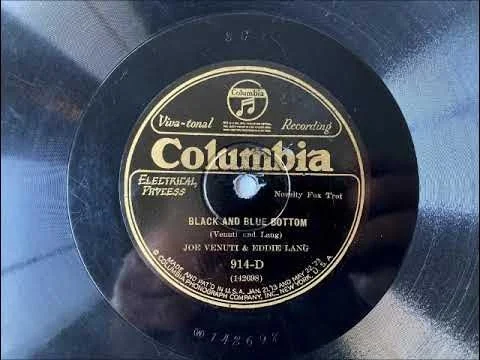
BLACK AND BLUE BOTTOM
Wednesday, September 29, 1926
Recording Location: Columbia Studios, 1819 Broadway (at Columbus Circle), in the Gotham National Bank Bldg, NYC.
Joe Venuti (violin), Eddie Lang (guitar).
42698-2 BLACK AND BLUE BOTTOM (Venuti-Lang)-Col 914-D
For two musicians celebrated for their melodic prowess, BLACK AND BLUE BOTTOM curiously defies conventional melody. Instead, "Bottom" becomes an exhilarating showcase for improvisation, highlighting Joe's stunning performance while Eddie lays down a captivating, rhythmic foundation. The way the violinist effortlessly executes those harmonic breaks is nothing short of breathtaking. As they approach the final chorus, Eddie elevates the piece with an impressive 12-bar sequence of chords, granting Joe the perfect opportunity to undo his bow and wrap it around the instrument to showcase his skill at four-string violin playing. From their debut recording session, this groundbreaking record represents a transformative moment in jazz, showcasing an unparalleled collaboration entirely performed with just a violin and guitar.
Oh! and the title is a quintessential Venuti play on words, that cleverly satirizes the jazz age dance phenomenon of the Black Bottom, while also playfully referencing a good spankin'.
1926
TRUMPET SOBS
c. Monday, March 22, 1926, NYC.
WE THREE
Red Nichols-trumpet, Arthur Schutt-piano, Eddie Lang-guitar, Vic Berton-percussion.
n106747 TRUMPET SOBS (Nichols)-Perfect 14645-B, Pathe 36464-B
This acoustic recording showcases a stellar performance by the guitarist. It features an intro with harmonics and chords, inventive and funky accompaniment throughout, an 18-bar single-string solo, four 4-bar chord breaks, and two 2-bar single-string/chord breaks, concluding with a final chord. Don’t let the fact that it’s an acoustic recording (and the sound quality is dodgy) deter you from giving this record a good listen; it is a must-hear!
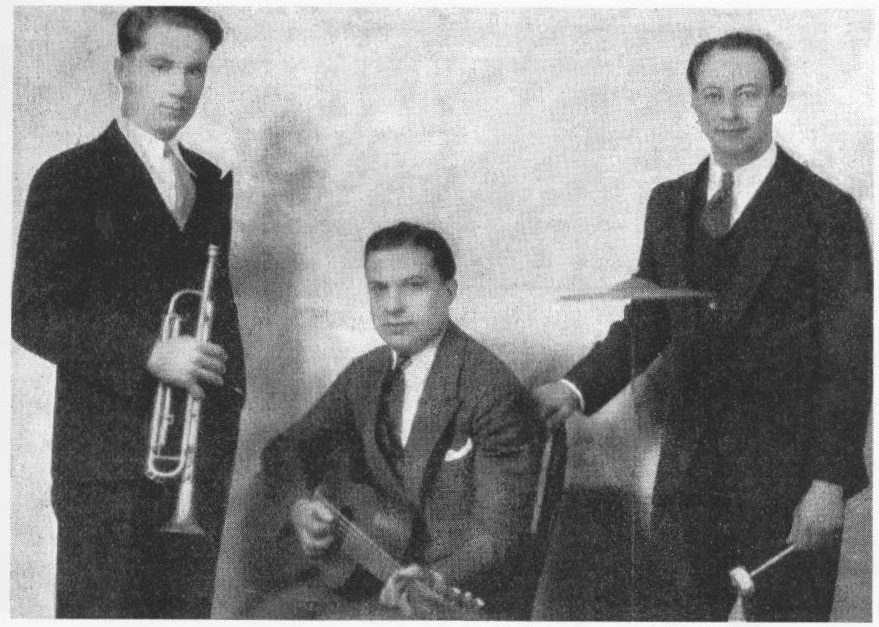
Red Nichols-trumpet, Eddie Lang-guitar, Vic Berton-percussion, c. 1926.
1927
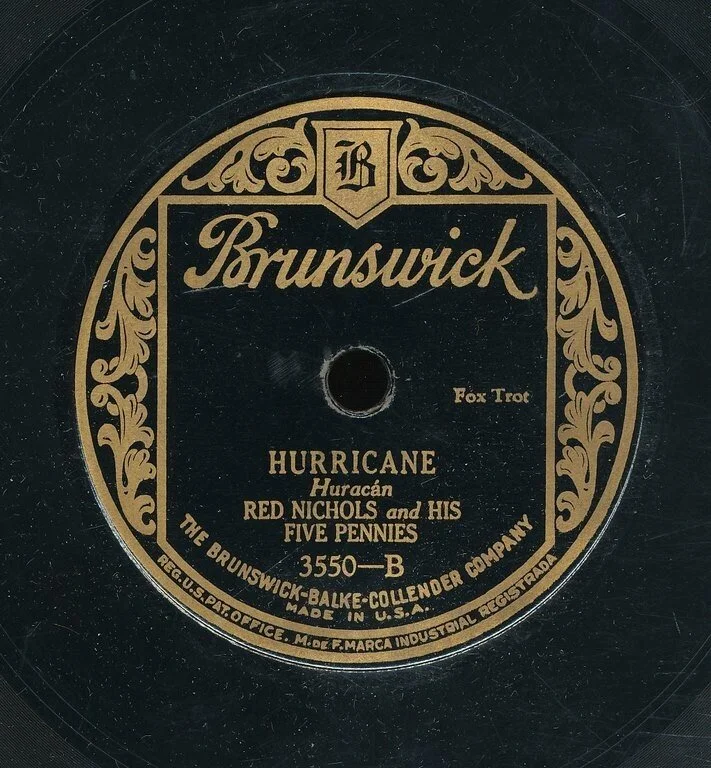
HURRICANE
Wednesday, January 12, 1927, NYC.
RED NICHOLS AND HIS FIVE PENNIES
Red Nichols-cornet, Miff Mole-trombone, Jimmy Dorsey-clarinet, alto sax, Arthur Schutt-piano, Eddie Lang-guitar, Vic Berton-drums.
E-22985 HURRICANE (Mertz-Nichols)-Brunswick 3550-B
A second highlight recording, featuring Eddie Lang with a Red Nichols ensemble, showcases Lang's impressive eight-bar solo in the bridge, which he concludes with a powerful lick executed flawlessly. In 1926, he was well ahead of his peers, enabling him to achieve such a remarkable performance. This moment offers a glimpse into the future of jazz guitar playing!

Red Nichols-trumpet, Jimmy Dorsey-clarinet, alto sax, Bill Haid-piano, Vic Berton-percussion, Miff Mole-trombone, Eddie Lang-guitar, c. 1926.
1927
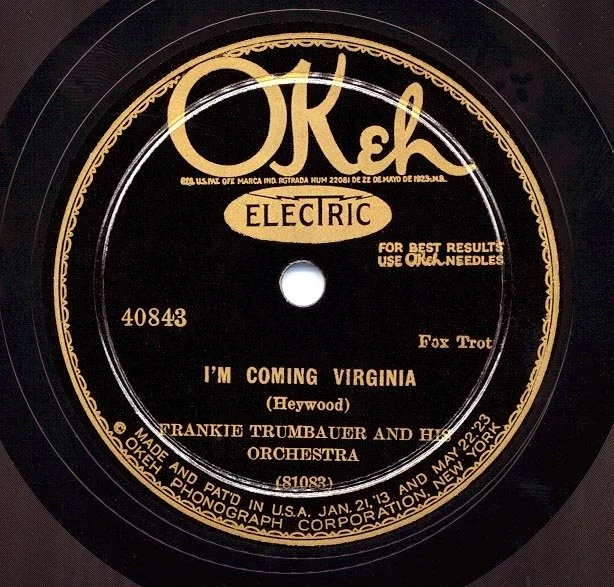
I’M COMING VIRGINIA
Friday, May 13, 1927, NYC.
FRANK TRUMBAUER AND HIS ORCHESTRA
Bix Beiderbecke-cornet, Bill Rank-trombone, Frank Trumbauer-c-melody sax, Don Murray-clarinet, tenor sax, Doc Ryker-alto sax, Irving Riskin-piano, Eddie Lang-guitar, Chauncey Morehouse-drums, harpophone.
w81083-B I’M COMING, VIRGINIA (Heywood-Cook)-OKeh 40843
MARTY GROSZ: If a more perfect symbiosis between guitar and jazz band than this exists, then I haven’t heard it. Not only is I’M COMING VIRGINIA one of the most poignant popular songs, but it is also, in this performance, a vehicle for one of jazz music’s greatest moments. Bix Beiderbecke’s gorgeous solo and Eddie Lang’s touching accompaniment cannot be improved upon. If Lang had never made another record, his work here would have assured him a niche in the jazz pantheon. His single-string replies to Trumbauer’s introductory notes, his sparse phrases during the transition from F-major to F-minor that sets up the verse, and his ascending run at the coda are highlights of his sympathetic guitar work. He plays throughout as if he can read Bix’s mind and concludes the masterpiece with ethereal high notes, daunting false harmonics that he executes flawlessly. This achievement of Bix and Eddie on May 13, 1927, reminds us that we cherish music because it says what words cannot.
1927
PRELUDE OP. 3, NO. 2.
Saturday, May 28, 1927, NYC.
ED LANG
Guitar Solo
Eddie Lang-guitar
80940-B Prelude (Rachmaninoff Op. 3, No. 2)-OKeh 40989
MARTY GROSZ: Composed by Sergei Rachmaninoff in 1892, PRELUDE had, by 1927, become a staple of student piano recitals, its first three notes a cliché that drew snickers when quoted out of context. Lang’s adaptation of this “classical” piece is in keeping with the usage of turn-of-the-century banjoists who often included light classics in their repertoires. Nevertheless, Eddie was one of the first jazz musicians to venture into the realms of so-called “serious” music. According to his wife Kitty, he spent hours practicing this piece; time well spent.
The number is transposed from the piano key of C# minor up to E minor in order to utilize the guitar’s low E-string. In Eddie’s hands, the number loses much of its somber pomposity, becoming an engaging sequence of rapidly shifting harmonies. Note that he begins the piece using a pick, changes to finger style, and winds up again using a pick.
Whether Eddie was familiar with the early recordings of Andrés Segovia, the first modern exponent of the classical guitar, is open to question. I tend to believe he was, for the Spaniard’s reputation was worldwide. Segovia would make his American debut at New York’s Town Hall in 1928. According to the late Bill Priestly, an ardent amateur guitarist, “they were all there,” meaning the likes of Eddie Lang, Dick McDonough, Carl Kress, etc., the finest plectrists on the New York scene.
Eddie didn’t live long enough to delve further into the classical repertoire. His acolytes, Kress and McDonough, did. Their DANZON (1933) and Kress’ compositions for a solo album (1939) incorporated classical materials.

1928
WORK OX BLUES
Thursday, November 15, 1928, NYC.
Texas Alexander
Alger (Texas) Alexander-vocal, Lonnie Johnson-guitar, Eddie Lang-guitar
401331-A THE RISIN’ SUN (Alexander)-OKeh 8673
MARTY GROSZ & MIKE PETERS: The guitar duo of Lonnie Johnson & Eddie Lang (as Blind Willie Dunn) makes its first studio appearance as accompanists for Alger “Texas” Alexander, one of the few blues shouters who didn’t accompany himself. It was also the first and last time Eddie backed a rural blues singer. (Lang & Johnson would make the first of their duet recordings two days after this session).
Johnson is playing a 12-string flat-top guitar. The 12 strings share the customary tuning of the six-string instrument, E-A-D-G-B-E, except that there are two strings for each note as on a mandolin. The bass strings are tuned in octaves and the treble strings in unison. The aim is to produce volume and sustain. The result is a metallic, jangling tone, replete with whining notes and clashing overtones, properties favored by blues guitarists.
Lang, on the other hand, employs his carved top instrument strung with heavy-gauge strings over a high action, which provides a fat, robust tone suited to his full-chord orchestral style. His resonant bass notes act as a foil to Johnson’s metallic treble tone.
Lang and Alexander resort to formula to back Alexander. WORK OX BLUES, set in the key of D major, begins with a four-bar guitar intro after which Alexander sings a chorus, followed in each instance by a Lang solo. Then two more vocal choruses, concluding with a solo chorus by Johnson.
1929
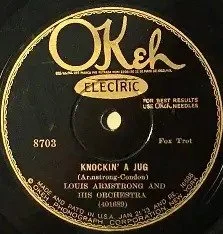
KNOCKIN’ A JUG
Tuesday, March 5, 1929, NYC.
Louis Armstrong and his Orchestra
Louis Armstrong-trumpet, Jack Teagarden-trombone, Happy Caldwell-tenor sax, Joe Sullivan-piano, Eddie Lang-guitar, Kaiser Marshall-drums.
w401689-B KNOCKIN' A JUG (Armstrong-Condon)-OKeh 8703
MARTY GROSZ: At a musicians' get-together that welcomed Louis Armstrong back to New York after an almost three-and-a-half-year absence, Eddie Condon persuaded Tommy Rockwell, OKeh’s recording director, to record a group of black and white jazzmen, selected from among the distinguished guests. The celebration lasted into the wee hours, and when it broke up, the drummer, Kaiser Marshall, recalled, “I rode the boys around in my car in the early morning hours and we had breakfast around six so we could get to the studio at eight. We took a gallon jug of whiskey with us.”
Armstrong was slated to record with members of the Luis Russell Orchestra, and it had been arranged that the mixed group would record first. However, the instigator, Eddie Condon, never one to decline a drink, had passed out. Hence, we see him credited as co-composer of KNOCKIN’ A JUG, but don’t hear the banjo.
Eddie Lang’s two-bar vamp introduces the piece, an improvised 12-bar blues in Bb. Jack Teagarden, feeling no pain, leads off with two rough-hewn, impassioned choruses. The recording balance leaves much to be desired. Marshall, who plays first with sticks on the rim of the snare drum and then switches to brushes, is positioned too close to the microphone. Joe Sullivan’s piano is almost lost in the distance.
Lang opts to accompany in single-note lines as he was wont to do on blues dates when a piano was present. He’s plucking the strings with his fingers instead of picking them with a plectrum, a common enough technique on a gut-strung instrument. But Lang is playing an arch-top Gibson L-5 equipped with the heavy-gauge steel and bronze-wound strings that he favored. Common sense would have dictated the use of a pick in order to give the guitar maximum presence in the face of horns and drums, as was his custom on any number of band sessions. Why he chose the softer finger-style remains a mystery.
Lang’s guitar chorus is a model of relaxed economy. During the ensuing solos, first by tenor sax and then piano, he plucks bass notes. Not until Armstrong enters over an organ background by trombone and tenor sax does he strum chords, though it’s difficult to hear them.
1931
I’LL MAKE A HAPPY LANDING
c. December 1931-1932
Friendly Fred (Rich) & The Friendly Five Orchestra w/Joe Venuti & Eddie Lang.
I’LL MAKE A HAPPY LANDING (Gibbons)-Friendly Five Footnotes Radio Broadcast, NYC.
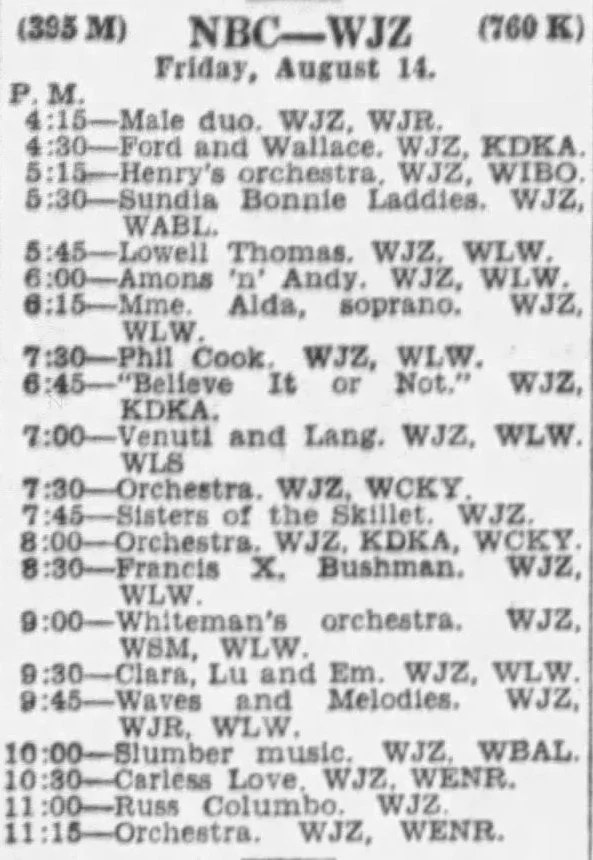
After returning from the West Coast with Paul Whiteman following the production of the film "King of Jazz" in the spring of 1930, Venuti and Lang once again established themselves in New York City's recording and broadcasting studios. During this time, the record industry struggled due to the Great Depression, but radio remained a strong medium. The violinist and guitarist were frequently called upon not only as sidemen but also as featured artists. Their rise to recognition dates back to 1927, when the duo was featured in nightly broadcasts with the Roger Wolfe Kahn Orchestra from his upscale Broadway venue, “Le Perroquet de Paris.” This trend continued during their time with Whiteman.
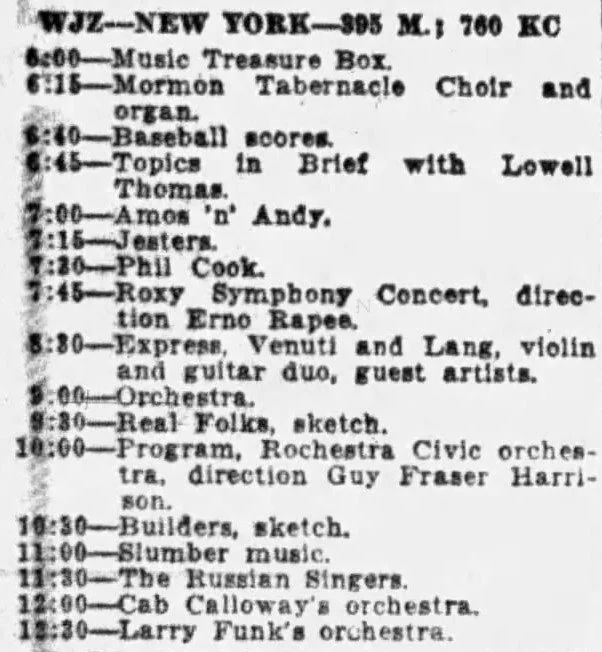
One example of their presence on the air can be heard on the "Friendly Five Footnotes", a fifteen-minute weekly program. Typically, band members did not receive introductions; these were mainly reserved for the orchestra leader and the singers. However, by 1931, Venuti and Lang had become well-known in their own right, as evidenced by a small sample of newspaper ads highlighting their radio appearances. Be sure to check out the ad for their Venuti/Lang half-hour broadcast on Friday, August 14, 1931 (it was probably only a fifteen-minute show, but even that is impressive!).




1932
FEELING MY WAY
Sunday, September 25, 1932, 9 pm PT, Los Angeles, California.
Union Oil Dominos Radio Show
KFI (50,000 watts AM station), located at the top of the Packard dealership building, Tenth & Hope Streets, Los Angeles, California.
Eddie Lang, accompanied by Lennie Hayton.
Eddie Lang-guitar, Lennie Hayton-piano, Jack Sheehan-host.
FEELING MY WAY (Guitar Mania Pt. 2) (Lang-Kress)
The penultimate entry in celebration of Eddie Lang's birthday gives you a front-row seat to a radio broadcast few have heard since its original airing 93 years ago. This excerpt from Bing Crosby's appearance on the Union Oil Dominos Radio Show features Eddie on the Lang-Kress composition, FEELING MY WAY, initially recorded by the guitar duo for Brunswick Records earlier that same year.
What we have here is a live edition of that same piece, this time with piano accompaniment, offering a glimpse of Lang's solo feature during the Crosby, Hayton, and Lang 1932 cross-country tour. This tour of stage performances dotted the northeast and portions of the north as the trio traveled to Hollywood to film "The Big Broadcast," which marked Crosby's first full-length starring role in a motion picture. After filming, the trio hit the road again in September, this time on the West Coast, and it is here that we tune in to radio station KFI (a powerful 50,000-watt AM station) on Sunday evening, September 25, at 9 PM Pacific Time.
Introduced by the show’s host, Jack Sheehan, Lang, accompanied by Hayton, plays both his original recorded part and the contributions from Kress. This rendition, delivered with more pep than the original recording, maintains the original melody and features a double-time chorus. Lang adds opening and closing flourishes with remarkable ease.
NOTE: The Crosby, Lang, and Hayton tour was Crosby's only personal national tour in his career until he took to the road in the 1970s, most notably with the "Bing Crosby and Friends" stage show, which included the Crosby family, Rosemary Clooney, and Joe Bushkin's quartet.


September 25, 1932, The Sacramento Union, Sacramento, California.
1933
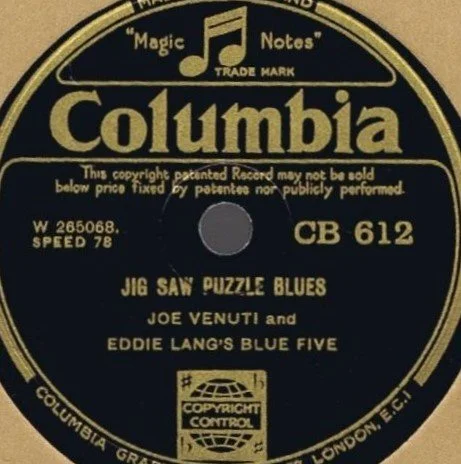
JIG SAW PUZZLE BLUES
Tuesday, February 28, 1933
JOE VENUTI AND EDDIE LANG’S BLUE FIVE
Joe Venuti (violin), Eddie Lang (guitar), Phil Wall (piano), Jimmy Dorsey (alto sax, clarinet, cornet), Adrian Rollini (bass sax, goofus, vibraphone).
Recording Location: Columbia Studios, 55 Fifth Avenue (at 12th St.), NYC.
265068-2 Jig Saw Puzzle Blues (Rollini)-Col 2782-D
For the final Venuti-Lang recording session, Joe Venuti and Eddie Lang brought together Jimmy Dorsey and Adrian Rollini, two of the most outstanding instrumentalists of the previous decade. Both Dorsey and Rollini had delivered stunning performances on several earlier Blue Four recordings, but they had never recorded together under Joe and Eddie’s leadership until now. The result was spectacular, often regarded as their best small group session. With this recording, Venuti and Lang perfected their concept of interpreting jazz through a blend of wind and string instruments.
All four three-minute tracks showcase exceptional small group arranging, interpretation, and both collective and individual performances. They deftly integrated every aspect of the Venuti-Lang small group formula. The repertoire reflects their ability to honor the past while also making innovative strides forward; they gloriously rearranged two contemporary pop songs ("Pink Elephants" and "Hey! Young Fella (With the Old Umbrella)"), reinvented one classic ("Raggin’ the Scale"), and Rollini contributed a last-minute original titled JIG SAW PUZZLE BLUES, featuring 12 bars of single-string guitar that begin in a “bluesy” mode and culminate in a double-time flurry of notes by Lang.
NOTE: Fans of the pop group Fleetwood Mac may recognize the title JIG SAW PUZZLE BLUES. In 1968, Mac guitarist Danny Kirwan incorporated elements of Jimmy Dorsey’s clarinet solo and built a song around it.
SPECIAL THANKS
Michael Cuscuna & Scott Wenzel: The Classic Columbia and OKeh Joe Venuti and Eddie Lang Sessions, Mosaic Records, 2002.
Nick Dellow: Eddie Lang-The Formative Years 1902-1925 Part 1 & 2.
Michael Feinstein.
Marty Grosz.
Richard Hadlock: Jazz Masters of the Twenties, Macmillan Publishing Co., Inc., 1965.
Jeff Healey.
Steven Lasker.
Dan Morgenstern: Institute of Jazz Studies @ Rutgers.
Doug Pomeroy.