VENUTI SWINGS, STARR SINGS
“If Anybody Is My Mentor, It Would Be Joe Venuti” - Kay Starr
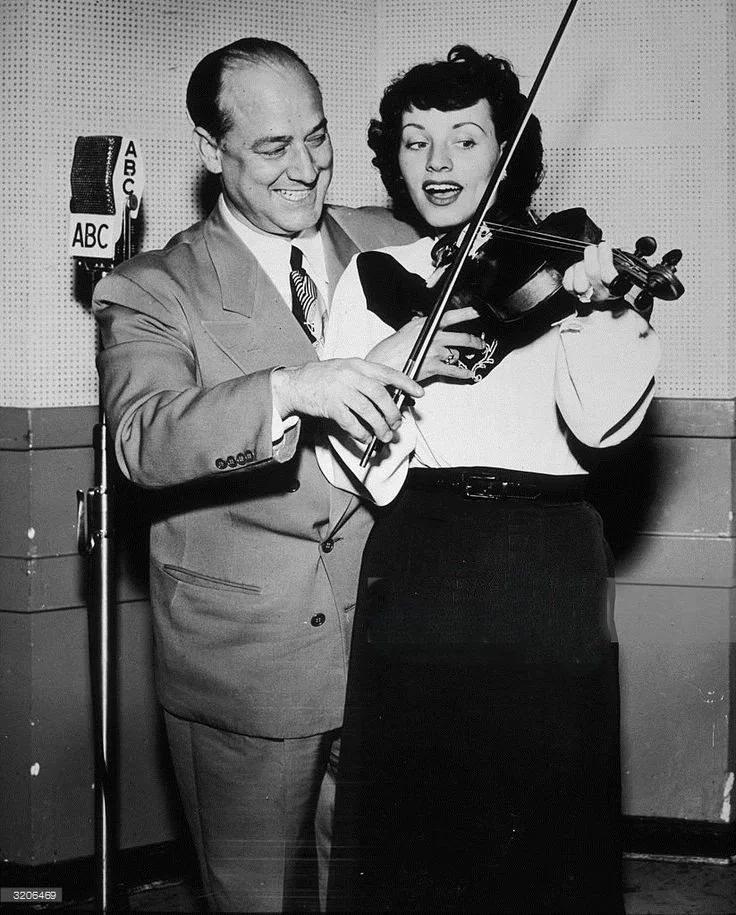
Our three-part feature spotlights the collaborative history of Joe Venuti & Kay Starr, along with the singer's work with the big bands of Glenn Miller, Bob Crosby, and Charlie Barnet. Part one will spotlight 1937, with Kay Starr beginning her professional career in Memphis, Tennessee, and her first year as vocalist with Joe Venuti’s Orchestra. Part two covers her years performing and recording with the big bands of Joe Venuti, Glenn Miller, Bob Crosby, and Charlie Barnet. Part three traces her activities in 1945 & 1946, featuring Starr’s 10 sides recorded with Venuti and Les Paul for the Lamplighter label in the spring of 1945.
NOTE: Unfortunately, Joe Venuti and the Joe Venuti Orchestra did not secure a recording contract—a significant setback for any performing artist. Their recorded output is limited to eight sides made over four years: four for Columbia in October 1935 and four for Decca in January 1939, none of which stand out. Despite regular broadcasting, the absence of compelling recorded material hindered the ensemble’s prospects. The January 1942 radio broadcast from the Peabody Hotel in Memphis remains the only surviving example of Venuti’s big band with Kay Starr (or at least the January 1942 lineup, as Venuti frequently changed musicians and bands). Additionally, a few airchecks from 1945–46 do little to enhance Venuti’s legacy.
PART ONE
“I am a firm believer that a singer is no more than an actor or an actress set to music. They learn the story, they tell the story, and if they don’t tell the story right, people are not going to like it, no matter what the melody is.” - Kay Starr
Born Katherine Laverne Starks on July 21, 1922, on a reservation in Dougherty, Oklahoma, Kay Starr would become one of the most prolific voices of the 1940s and ’50s. She was known for incorporating the music of the American South and Southwest into her musical style. She grew up during the Great Depression and thrived at the start of the rock-and-roll era.
Starr was born to her father, Henry, an Iroquois Native American, and to Annie, of mixed Irish and Native American heritage. Her father worked for the Automatic Sprinkler Company while her mother raised chickens. As a young girl, Starr liked to serenade the coop.
"Mother raised chickens. We had a hen house, and when it was time for the hens to roost, I would pretend like I was playing piano with an old apple box and I would sing to them." – Kay Starr
Kay's Aunt Nora recognized the talent in the young girl and persuaded Annie to enter Kay in WRR-Dallas' weekly talent contest (at Dallas' Melba Theater).
"I didn't have enough sense to be scared. It was a contest to promote yo-yos. And I didn't have a yo-yo, so they'd give me one, and I'd get to sing, which I loved, and I didn't care why I did it. So, they gave me a yo-yo about a week in advance. I wasn't very good with it, but I was good enough to do straight up-and-down, 'See the World.' And then I learned to do 'Around the World.' Those were the only tricks I could do, but I could do 'em singin' "Potatoes are Cheaper/Tomatoes are Cheaper/Now's The Time To Fall In Love." I won third prize: two tickets to come back and watch somebody else be foolish. But it was during the depression, and everything you got for nothing, well, you prized it." - Kay Starr
The following week, Kay won. Then Kay continued to win the contest every week until the radio station retired her, giving Kay her own weekly 15-minute program, billed as “Katherine Starr.”
Her singing abilities won her a 15-minute radio show on Dallas station WRR. On her show, Starr would sing pop and country songs with piano accompaniment. By age 10, she was making $3 per night, a generous paycheck for the Great Depression.
The Starks soon relocated again, this time to Memphis, Tennessee. In Memphis, Kay secured a radio show on station WREC, as well as a regular spot on 'Saturday Night Jamboree' broadcast on WMPS. It was at this time that many misspellings of her name prompted Kay and her parents to change her name from Katherine Starks to Kay Starr.
When Starr’s father moved the family to Memphis, young Kay continued her radio performances, singing mostly the Western swing genre.
WED JULY 28-TUE AUGUST 10, 1937: Peabody Hotel, Memphis, Tennessee.

The Commercial Appeal, Memphis, TN, July 25, 1937.

The Commercial Appeal, Memphis, TN, July 30, 1937.
Singing with the Venuti band at this time is Judy Mack of the Mack Sisters. She and her husband, Lenny, joined the Venuti orchestra during its June 12-22 run at the 1937 edition of The Great Lakes Exposition in Cleveland, Ohio.

The Commercial Appeal, Memphis, TN, Sun Aug 1, 1937.

The Minneapolis Star, MN, Sat Oct 2, 1937.

The Commercial Appeal, Memphis, TN, Tue, Aug 10, 1937.
WED AUGUST 11: Ely-Walker Garment Factory Grand Opening, Paragould, Arkansas, KBTM Radio Broadcast.

Jonesboro Daily Tribune, Jonesboro, Arkansas, Wed, Aug 11, 1937.

Paragould Daily Press, Paragould, Arkansas, Mon, Aug 9, 1937.
SAT AUGUST 14: Club Casino, Greenville, Mississippi.
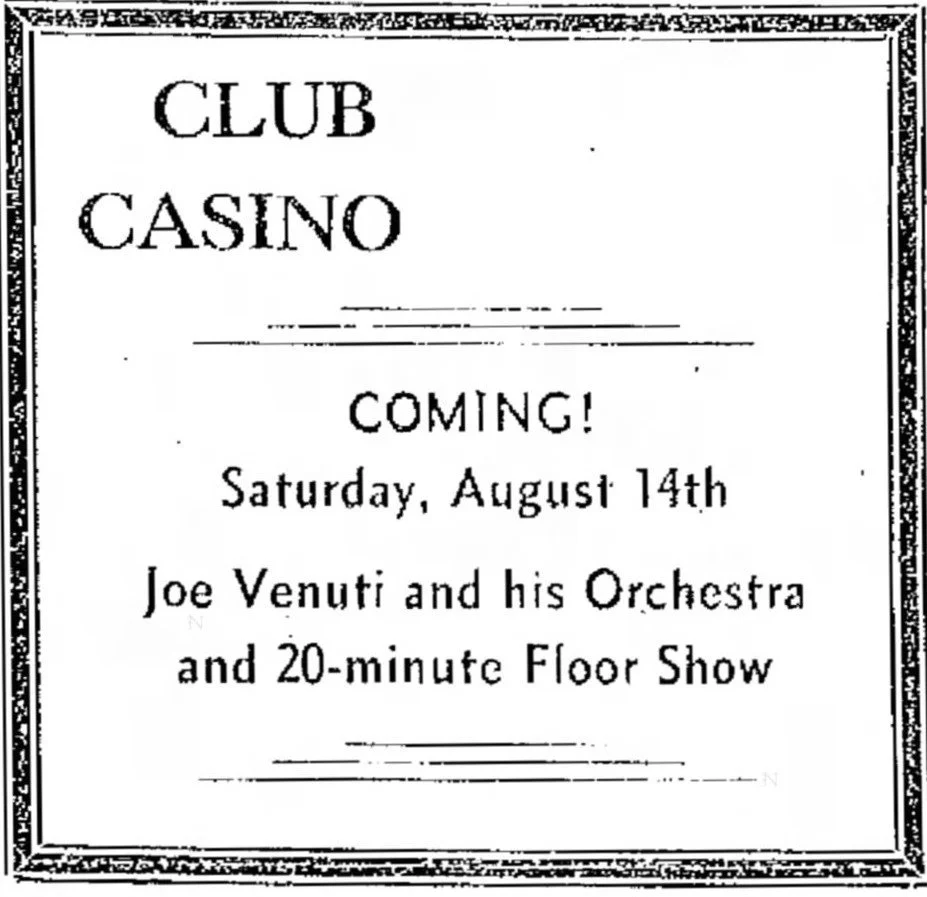
The Delta Democrat Times, Greenville, Mississippi, Fri, Aug 13, 1937.
“If Anybody Is My Mentor, It Would Be Joe Venuti” - Kay Starr
FRI AUGUST 20: Peabody Hotel, Memphis, Tennessee.
The Venuti Orchestra returns to Memphis on August 20th for a one-nighter at the Peabody Hotel. Singer Judy Mack was no longer with the band. This is probably the date Kay Starr joined the band and continued touring with Joe Venuti, possibly through the Labor Day weekend, when she and her mother returned to Memphis, and the fifteen-year-old returned to school.

The Commercial Appeal, TN, Fri, Aug 20, 1937.
When jazz bandleader and violinist Joe Venuti came to Memphis in 1937 for an engagement at the Peabody Hotel, he was surprised to find that his contract required him to have a female vocalist (which he did not have). Venuti's road manager had heard Kay on the radio and suggested that Venuti go to Kay's home and discuss the possibility of hiring her for Harry and Annie. Venuti was so impressed with Kay that he asked her parents if she might tour with the band that summer. Since Kay was not yet 15, it was agreed that Annie should also come along.
"That summer, Joe Venuti asked my parents if I could travel with the band. Well, of course, my mother loved the idea! She went with me. But because she's only seventeen years older than I am, Joe said, 'We're going to be working in hotels where they serve cocktails and things, we can't tell them how old she is. We won't lie, but if they don't ask, don't volunteer!' So we played a game. My mother was my sister. This was a wonderful game for a twelve-and-a half year old. And my mother loved it, because it made her seem much younger, and still got a chance to look after me and supervise what I was doing." – Kay Starr

The Commercial Appeal, Memphis, TN, Sun, April 20, 1952.
SAT AUGUST 21: Wagon Wheel, Nashville, Tennessee.
TUE AUGUST 24: Wagon Wheel, Nashville, Tennessee (held over).


The Tennessean, Nashville, TN, Mon, Aug 23, 1937. The Tennessean, Nashville, TN, Tue, Aug 24, 1937.
WED AUGUST 25: West View Park, West View, Pennsylvania.
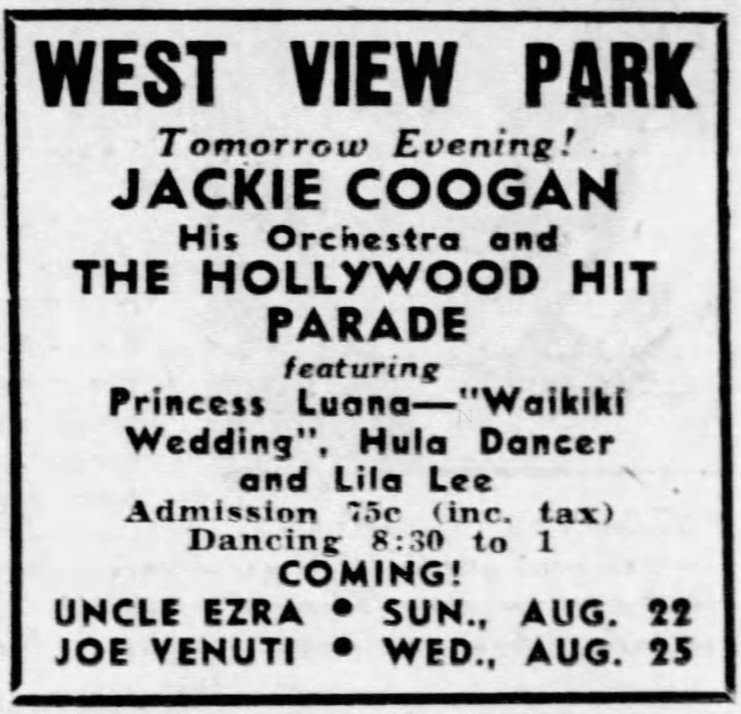
The Pittsburgh Press, PA, Tue, Aug 17, 1937.
SAT, SUN, MON-SEPTEMBER 4,5,6-Casino Park, Fort Worth, Texas.
It is likely Kay Starr and her mother returned to Memphis around this time.
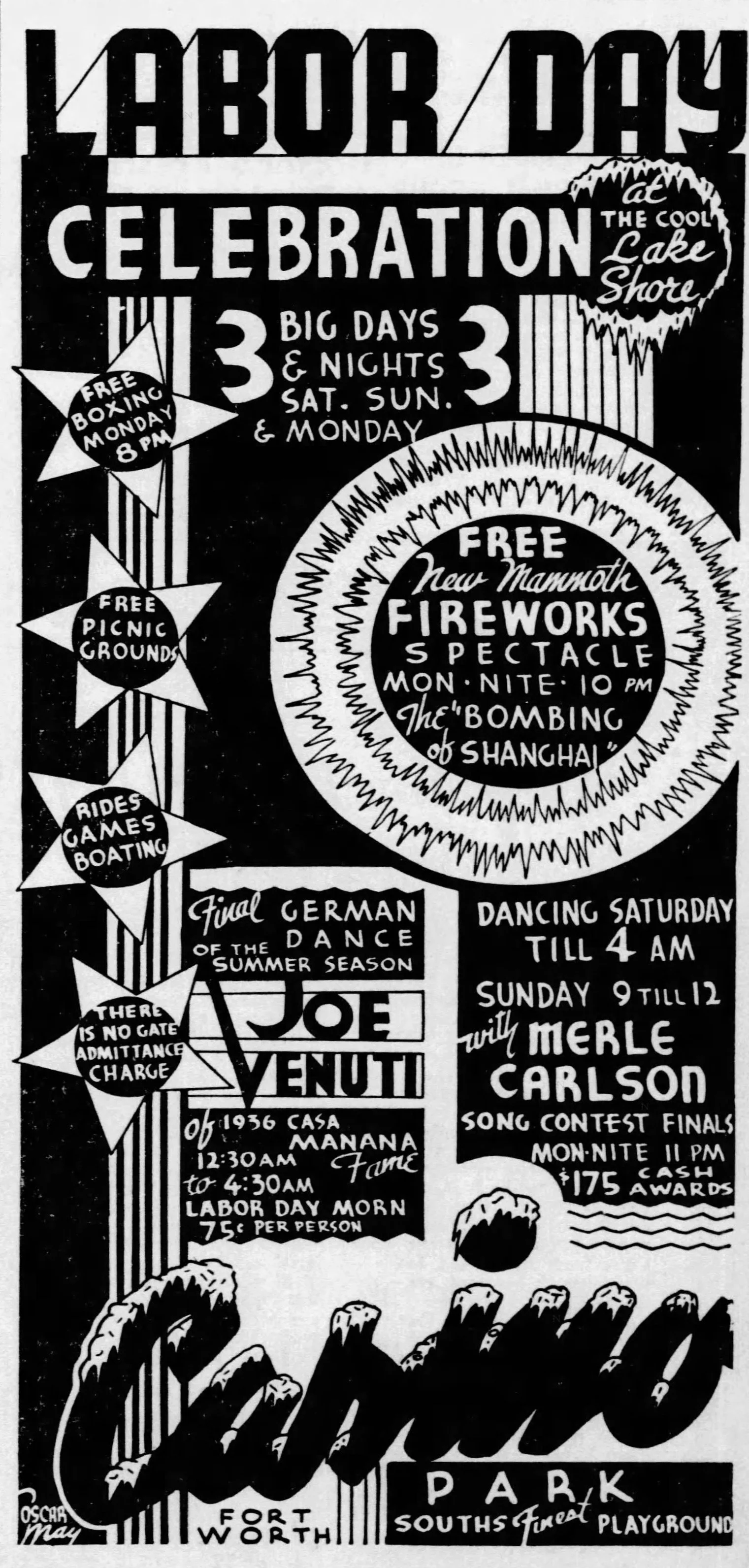
Fort Worth Star Telegram, TX, Wed, Sep 1, 1937.
PART TWO
Joe Venuti @ The Peabody Hotel, Memphis, Tennessee
The War Years
December 31, 1941-January 26, 1942
December 03, 1942-December 31, 1942
NOTE: The Venuti Orchestra did not appear at the Peabody Hotel in 1943, 1944, or 1945.
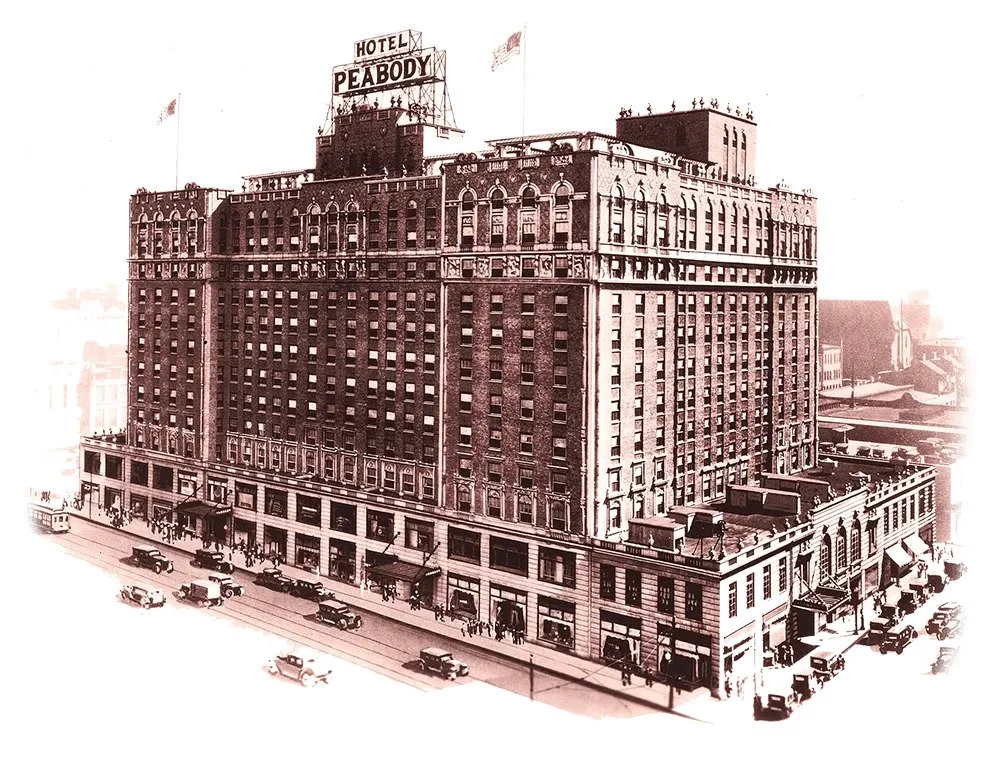
Peabody Hotel, ca. 1925.
The Peabody Hotel stands as one of downtown Memphis’s most iconic and historic landmarks, with origins dating back to 1869. The original hotel, located at Main and Monroe, quickly became the city’s premier social and business center. In 1925, a new and even grander Peabody opened at its current location on Union and 2nd Street, firmly establishing its reputation as the “South’s Grand Hotel.” In 1933, the tradition of the Peabody Ducks began when ducks were first placed in the lobby fountain—an 85-year legacy that continues with the celebrated March of the Peabody Ducks.
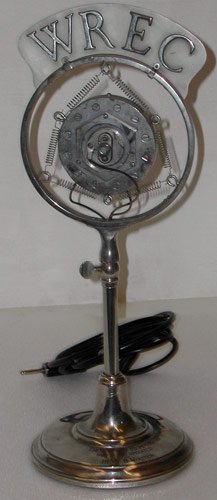
On April 23, 1929, Memphis radio station WREC established its studios in the basement of the Peabody Hotel, where it remained for over 40 years. Throughout the 1930s and 1940s, the station broadcast from the Skyway supper club on the hotel’s roof, featuring dance band performances that were carried nationwide via the CBS Network.
NOTE: At the conclusion of the Venuti broadcast, the WREC announcer hands off, saying, “Now we go to somewhere else on the radio,” which was news from NBC’s Blue Network.
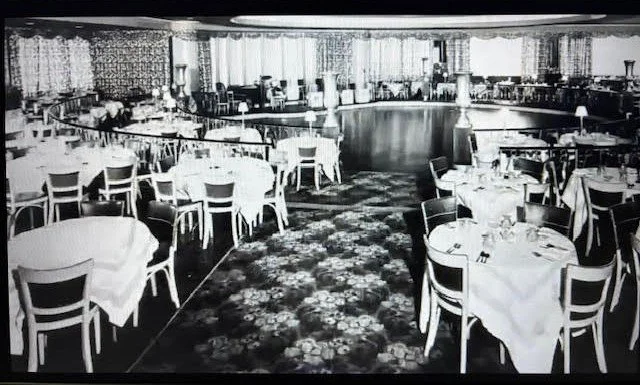
Skyway Supper Club, date TBD.
Memphis and the Peabody Hotel were, in many ways, a second home for Joe and Sally Venuti and the Venuti Orchestra. During their time in Memphis, the Venuti’s enjoyed a month-long residency at the Skyway Supper Club of the Peabody Hotel, attended social events, received favorable press, and performed at benefit gigs.
Venuti appeared at the Skyway twice in 1942. His first engagement began on New Year's Eve, Wednesday, December 31, 1941, and concluded on Monday, January 26, 1942.

The Commercial Appeal, Memphis, TN, Thursday, January 1, 1942.
He returned to Memphis for a month’s residence at the Peabody Hotel, opening on Thursday, December 3, 1942, and closing at the conclusion of their December 31 New Year’s gig.

The Commercial Appeal, Memphis, TN, Thursday, December 3, 1942.
The date of the radio broadcast is listed as December 1942. Listen closely to the conclusion of the broadcast when the local affiliate, WREC, 600 AM, hands off to the (Blue) Network, followed by a network news report. “For the second time in two days, an enemy warship, presumably a submarine, has sunk and struck at commercial shipping in New York waters ….”
NOTE: German submarine attacks on the east coast of America have been reported to have started January 14, 1942. There appear to be no reports of submarine activity on the East Coast during December 1942, Venuti’s second run @ the Hotel Peabody.
On Monday, January 26, there were news reports of German subs sinking tankers off the east coast (re: the January 25 sinking), which coincided with Venuti’s first appearance @ the Hotel Peabody, the broadcast announcer referring to Venuti leaving, and the Blue Network news report at the conclusion of the broadcast. It may be worth considering that the broadcast took place on Monday, January 26, 1942, the last night of Venuti’s run at the Hotel Peabody.

The York Daily News Times, York, Nebraska, Monday, January 26, 1942.
THE BAND
The draft, which began in September 1940, took its toll on second-tier touring bands, primarily composed of younger, less-seasoned players who were eligible for call-up. The attack on Pearl Harbor on December 7, 1941, and the subsequent declaration of war accelerated this process. The Venuti orchestra, already struggling with frequent personnel changes, was significantly affected. However, Venuti benefited from long-term engagements, such as the one at the Hotel Peabody. Aside from Venuti himself, bassist George Butterfield (Kay Starr’s husband), drummer Barrett Deems, and singers Texas Bill Satterwhite, Harry Parent, and Kay Starr, the identities of the other band members in this edition of the Venuti orchestra remain unknown.
NOTE: In announcer Bill Crowder’s closing remarks, he mentions singers Herbie Pearce, Fatso Daniels, and Hots Butterfield & The Gully Jumpers; however, none of them are present during this broadcast.

The Commercial Appeal, Memphis, TN, Monday, January 5, 1942.
Quotes from Harry Martin’s review of the status of the current Venuti orchestra from his “Footlights And Flickers” column in The Commercial Appeal, Memphis, Tennessee, Monday, January 5, 1942, are worth noting.
Sometimes Venuti leads a fine band into the Peabody, and sometimes the orchestra is just so-so.
And so, for ourself, we never care much about the quality of the attending instrumentalists.
As a matter of fact, however, the present Venuti orchestra is a very good one, easily the best this maestro has delivered to a local bandstand.
It represents a well-balanced combination of individual soloists molded into a smooth-functioning ensemble. It has been fortified by a solid set of thoroughly acceptable arrangements.
One of the things we like about this newer Venuti outfit is its treatment of blues. A number of authentic blues arrangements have been added to the repertoire, and they are given proper treatment.
On his first night in the Skyway (December 31, 1941), Joe found the place loaded to the eaves with youngsters from the high school sororities and fraternities …
The band on subsequent evenings has demonstrated its versatility with the ballads, the straight foxtrots, the waltzes … with an abundance of nicely set rhumbas.
Incidentally, the kids of the town have gone hysterical over the drumming of Barrett Deems.
Naturally, it is a thrill to have Kay Starr come home in top form.
Several chaps in the band sing … Texas Bill Satterwhite usually does the straight numbers.
He (Venuti) never takes a dare. In past years, we have reported on such stunts of his as putting gelatin into the hotel bathtubs of his bandmen, winning a $100 bet that he could play the fiddle while making a parachute jump, hiding all their reeds from the saxophone section at the last minute before curtain-rise on a theatre date.
THE BROADCAST
The four selections, from what would have been a thirty-minute air shot over local affiliate, WREC, 600 AM, find the band in good form.
Opening Theme (unknown title) is followed by the broadcast announcer, “Good Evening, Ladies & Gentlemen, from the Skyway …” The title of the opening & closing theme, and the singers Fatso Daniels & Herbie Pearce, both of whom do not appear on the broadcast, are unknown.
I Dreamt I Dwelt In Harlem, a top-three hit for Glenn Miller in 1941, opens the broadcast and is a complete performance utilizing Jerry Gray's stock arrangement.
Little Sleepy Head, written in 1940, saw chart success by Eddy Duchin & Lawrence Welk, who both made notable recordings in the first two years of the decade. This excerpt features twenty-year-old Kay Starr on vocals.
Wild Cat, a 1927 Venuti-Lang triumph, receives a rousing version by the Maestro.
Square Dance Number (title unknown) has Venuti sawing away on his fiddle for the closing number of the broadcast, into the closing theme.
SOURCES
Arcadia LP 2015.
The Great American Songbook Foundation Library & Archives, thesongbook.org/kay-starr
memphismusichalloffame.com/inductee/kaystarr
historic-memphis.com/memphis-historic/broadcasting
peabodymemphis.com
Special Thanks: Lloyd Rauch