AS I KNEW EDDIE LANG
By Jack Bland
Jazz Record, No. 15, December 1943.
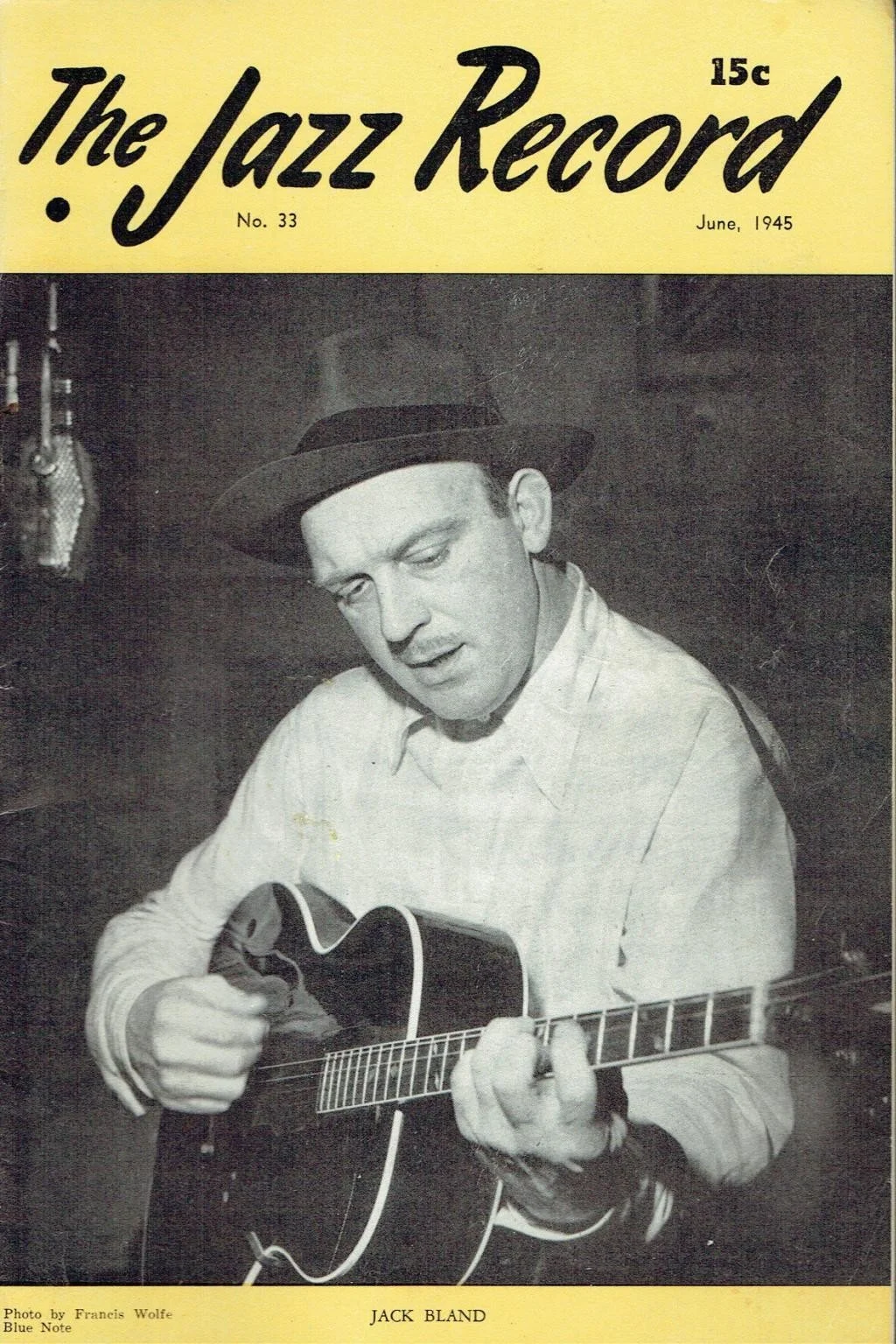
Jack Bland, ca, spring, 1945.
Banjoist and guitarist Jack Bland (May 8, 1899 – October 1968) is best remembered as the banjoist for the Mound City Blue Blowers, which he co-founded with Red McKenzie in St. Louis. By 1924, the group had a hit record in Chicago with “Arkansas Blues.” Later that year, guitarist Eddie Lang joined the group, and they toured England. By the mid-to-late 1920’s, Bland, like Eddie Condon, switched from the banjo to the cello-bodied four-string tenor guitar. During the 1930’s Bland was freelancing around New York City and recorded with the Billy Banks Orchestra, featuring Pee Wee Russell on clarinet, Henry “Red” Allen on trumpet, and drummer Zutty Singleton, followed by the Rhythmakers, which was essentially the same group, with Pee Wee Russell switching to tenor sax, Pops Foster on bass, and Fats Waller on piano. In 1932, Bland recorded with his own group, Jack Bland and his Rhythmakers, which had Tommy Dorsey on trombone. In 1940, Bland could be seen at many of the famous jam sessions at Jimmy Ryan’s Club on 52nd Street, produced by Commodore Records owner/producer Milt Gabler. He shared the stage with Henry “Red” Allen, Edmond Hall, Hot Lips Page, Zutty Singleton, Max Kaminsky, Ike Quebec, Vic Dickenson, Joe and Marty Marsala, and Charlie Shavers. In 1940, Bland recorded with Condon’s longtime drummer, George Wettling, and formed his own group later that year. In 1942, Bland returned to freelancing, worked with pianist Art Hodes from 1942 to 1944, and recorded with Muggsy Spanier in Chicago in 1943. By 1944, Bland was playing with his own group, and by the 1950s, he moved to Los Angeles, where he retired from music and worked for a taxi service. Jack Bland died in Los Angeles in October 1968. (Ted Gottsegen, Red Hot Jazz Archive).
AS I KNEW EDDIE LANG by Jack Bland
I first met Eddie Lang in 1924, in Atlantic City. He was playing with the Scranton Sirens, Russ Morgan, Jimmy Dorsey, Alfie Evans, Tommy Dorsey. It was in the summer; we were working at the Beaux Arts; they were working on New York Avenue in a café.

Atlantic City Gazette Review, New Jersey, Wednesday, May 28, 1924.
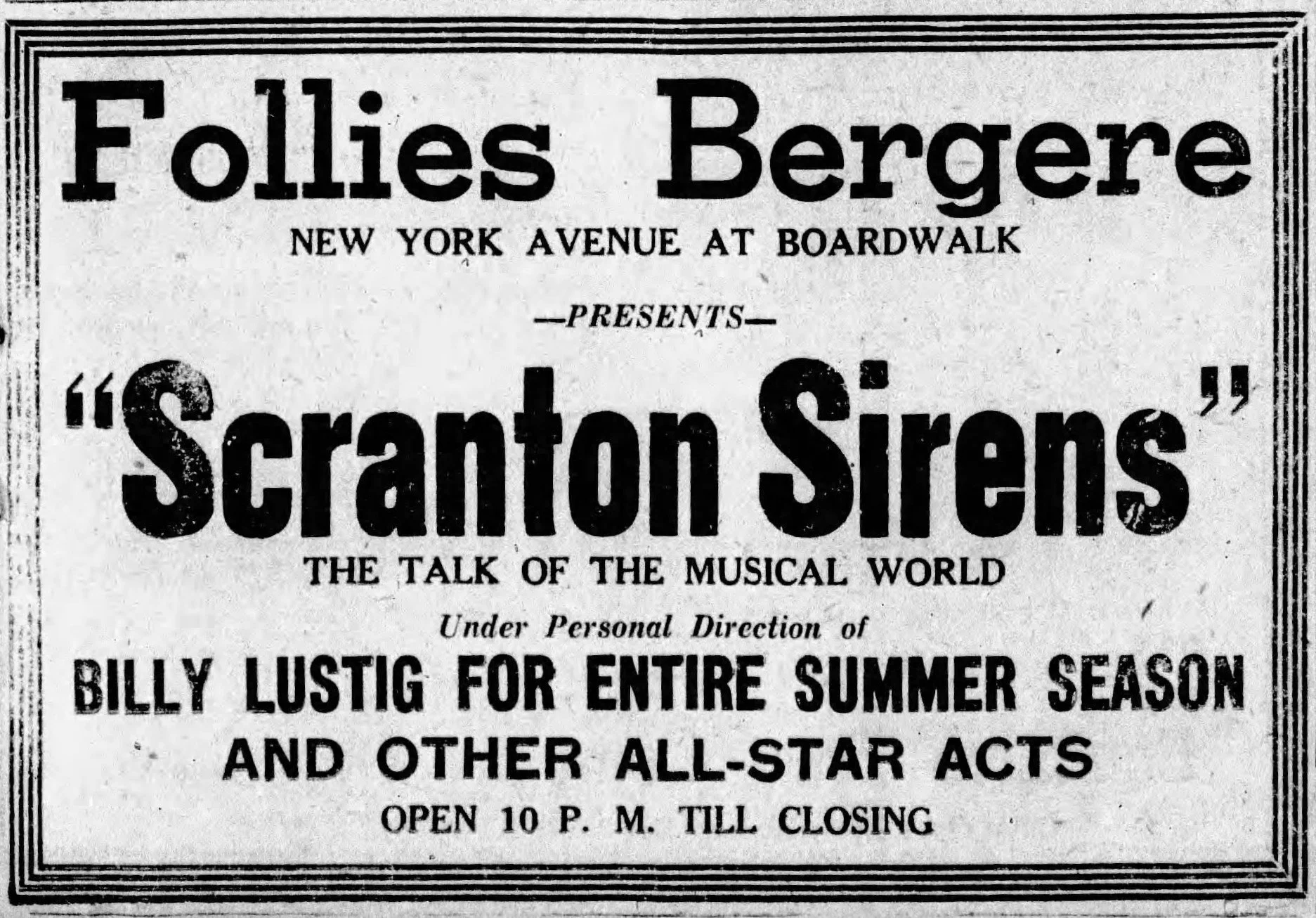
Press of Atlantic City, New Jersey, Saturday, June 14, 1924.
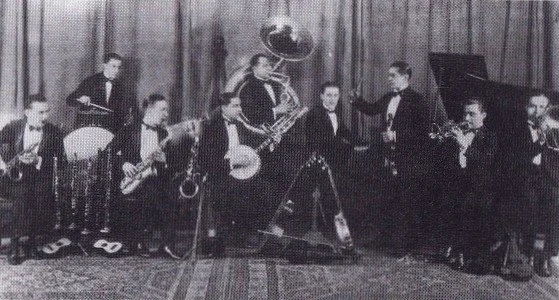
Scranton Sirens, ca. 1924.
Then in August, he joined the Mound City Blue Blowers, and we played the Palace Theatre after a week’s break in Jersey City, the State. He was supposed to meet us backstage at the State at 10 a.m. for rehearsal. We waited about an hour, and finally, from way up in the balcony, we heard a voice: “Hey, are you boys down there?” he had come in through the fire escape.
I remember that at a theater date in Minneapolis on a Friday night, they had to take the picture off three times because the crowd was clapping so hard, especially for Lang.
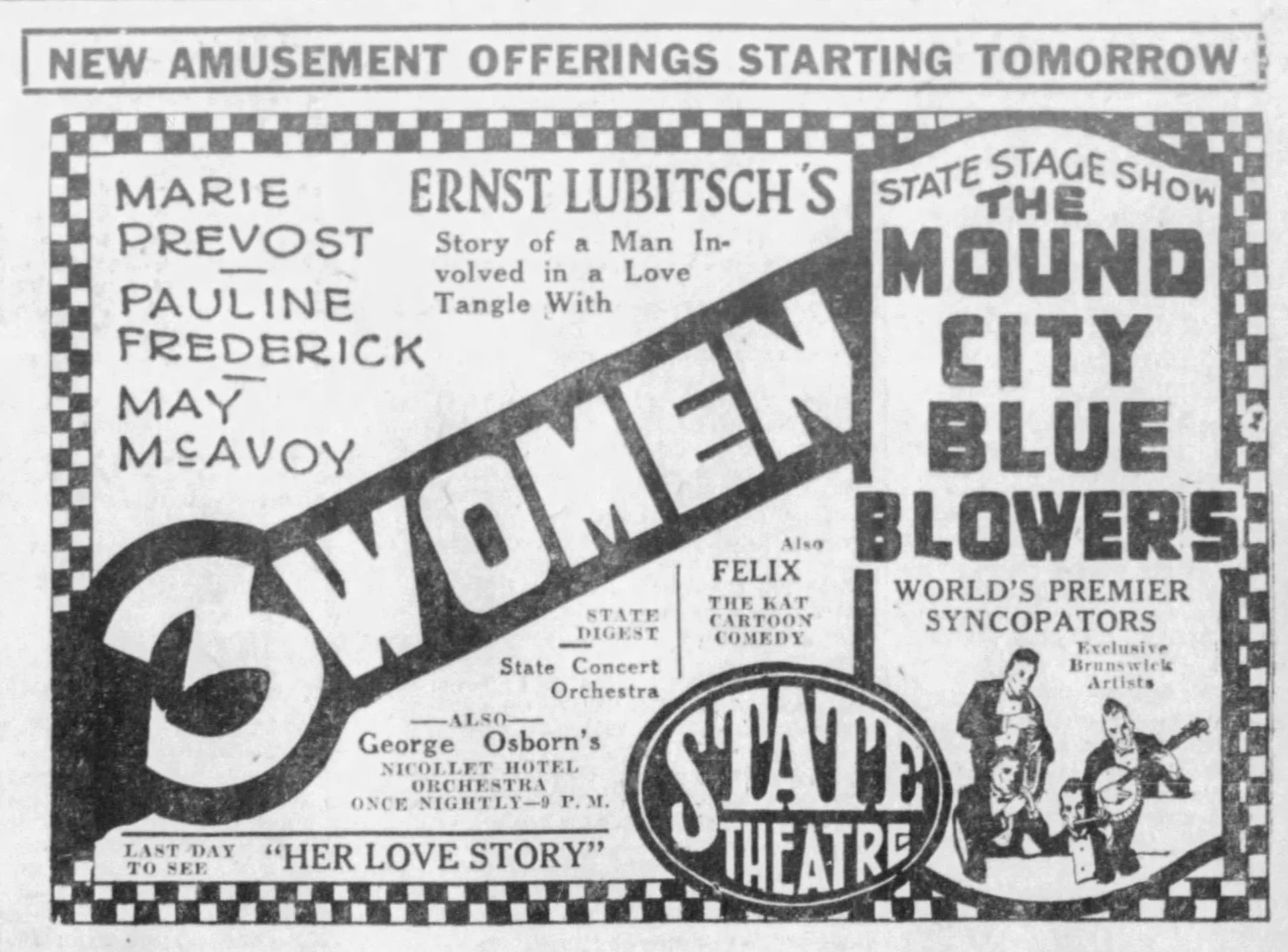
Star Tribune, Minneapolis, MN, Friday, October 3, 1924.
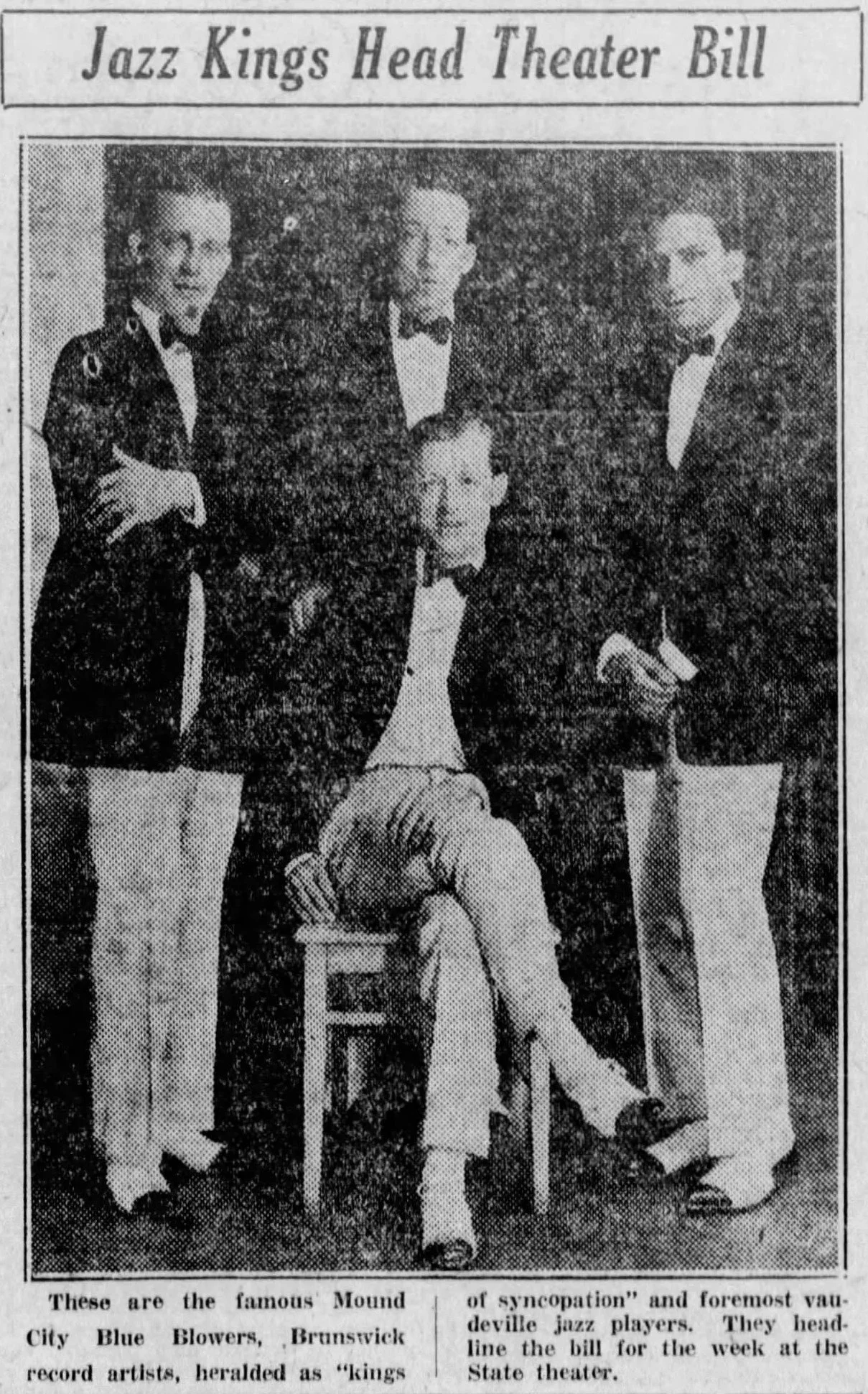
The Minneapolis Star, Minnesota, Saturday, October 4, 1924.
He used to come from Atlantic City to New York to record. We only made two records before he joined us “Arkansas Blues,” “Blue,” “Red Hot,” and “San.” Trumbauer was on the last two sides; “Red Hot” was his tune. After that, Lang was on every record that we made.
TIGER RAG-Dec 10, 1924, Brunswick Records: Eddie Lang’s first recording w/the Mound City Blue Blowers.
OCTOBER 29, 1925: A BANNER DAY FOR JAZZ GUITAR
IF YOU NEVER COME BACK-Oct 29, 1925: Eddie Lang’s final recording w/the Mound City Blue Blowers.
IF YOU NEVER COME BACK-Oct 29, 1925: Isolated guitar solo with a blistering run at the finale.
I’M SITTING ON TOP OF THE WORLD-Oct 29, 1925: Earlier in the day, Lang made his first recording w/Ross Gorman, delivering a single-string solo laced with vibrato and bluesy bends, along with swinging accompaniment.
The Blue Blowers were going big at that time, and we got an offer to play the Piccadilly Hotel in London. We had to get birth certificates to go to England, and Langie didn’t know whether he was born in Philadelphia, Atlantic City, or Italy.
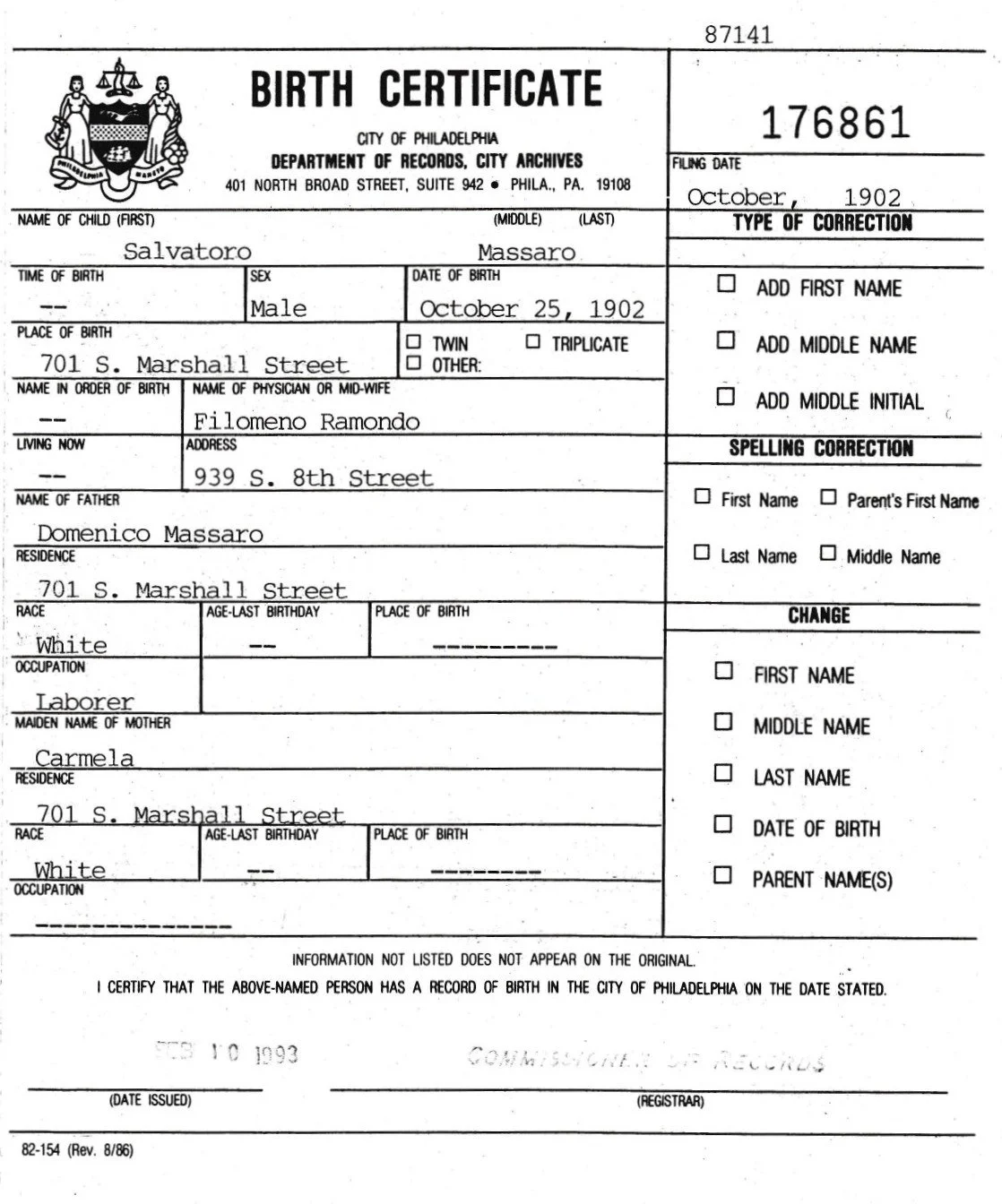
Eddie Lang’s Birth Certificate: b. October 25, 1902.
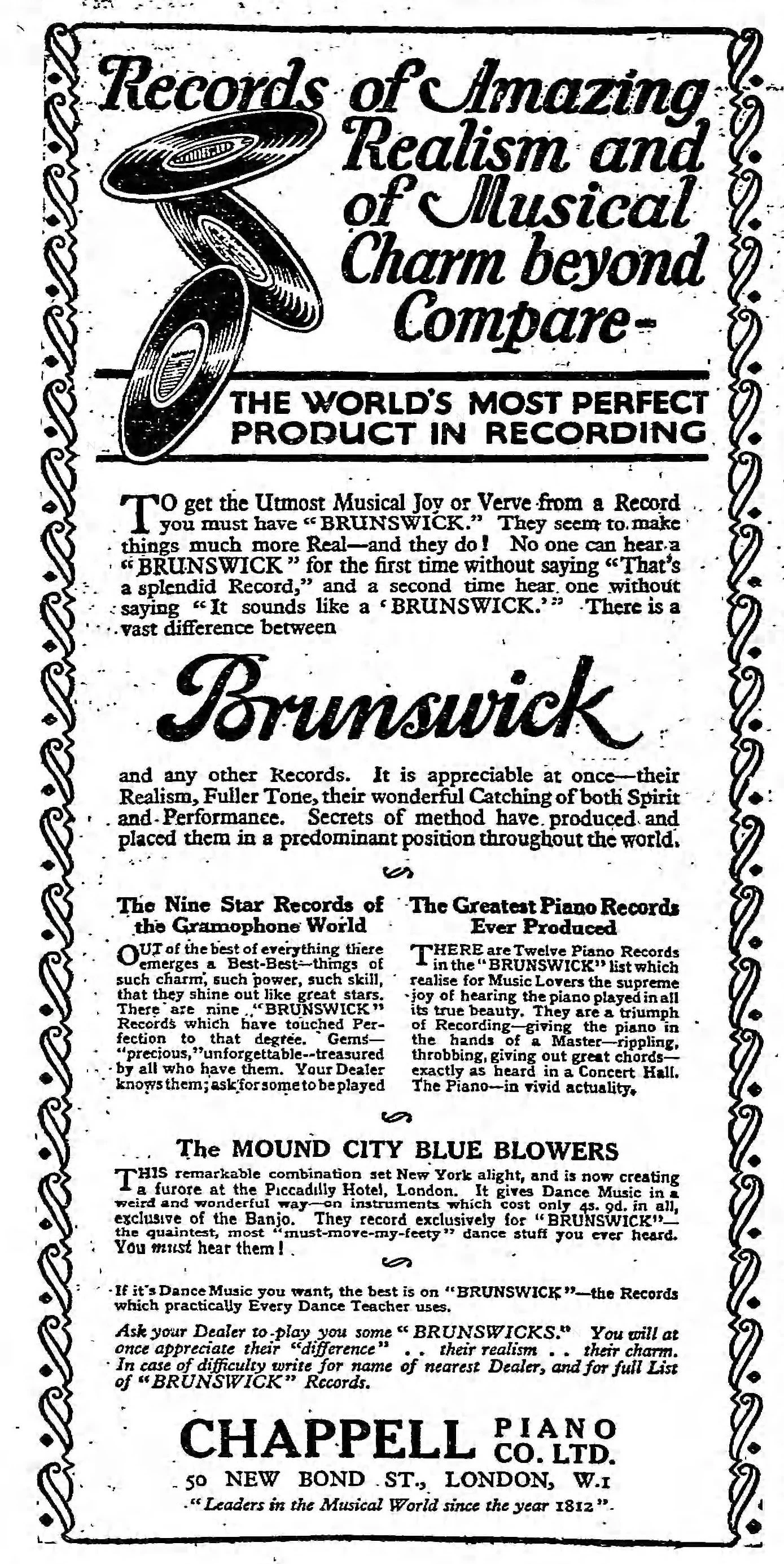
The Manchester Guardian, England. Monday, April 27, 1925.
On the way over, we had a few bucks saved, and we ran into a great dice shooter, who proceeded to take everybody’s money, betting he could throw the dice against the wall and throw ten or four. Finally, we reached England. First thing happened when we got off the boat, Lang wanted to go back immediately. The English fog hit him, and his hands turned purple, and he got scared.

Mound City Blue Blowers: Eddie Lang, Jack Bland, Dick Slavin, Red McKenzie, St. James Park, London, England, ca. April 1925.
Before we opened at the Piccadilly and agent put us out at Haggarty’s Empire, out in Limehouse. We played the first number real fast, “Tiger Rag.” Nobody understood or clapped or anything, and the orchestra leader looked at McKenzie, so McKenzie took a spit at the leader and said, “Which way do we go, boys? And out we went.
We finally got through the first show, and we wanted to cancel the whole thing, but the agent said, “All you have to do is play 'Red Hot Mama’ and they’ll learn it and sing it with you, and everything will be O.K.” So we played “Red Hot Mama” the rest of the week.
Langie and I lived together. We went up to hunt an apartment on Germaine Street. We asked the price of the apartment and the attendant said, “Seven guineas,” and Langie said, “You wouldn’t by any chance be gettin’ personal?”
In London, Langie took his guitar to the London Sporting Club and played, and they made him and me charter members. That really meant something, because the Sporting Club was composed of sportsmen who could bet up to a million without putting up the money.
He was the swellest guy that ever lived, the best disposition, you couldn’t make him mad. He was about five feet eight and a half inches, curly dark hair, and one of the best card players in the country. He could play any kind of cards. Lang stayed with us for four years. I’d say he was about 26 (NOTE: 22 years old in 1924) when he joined us.
We used to unpack and play on the street corner, or any bathroom, if anybody, a friend, wanted to hear us. He had the best ear of any musician I ever knew. He could go into another room and hit “A” and come back and play cards for fifteen minutes and then tune his instrument perfectly. I’ve seen that happen.
When we rode trains, Langie would sleep in a lower berth with Dick Slavin. He used to let Dick have that privilege for a buck cheaper, providing he let Dick have a half hour start on him so that he could fall asleep before Langie started snoring.
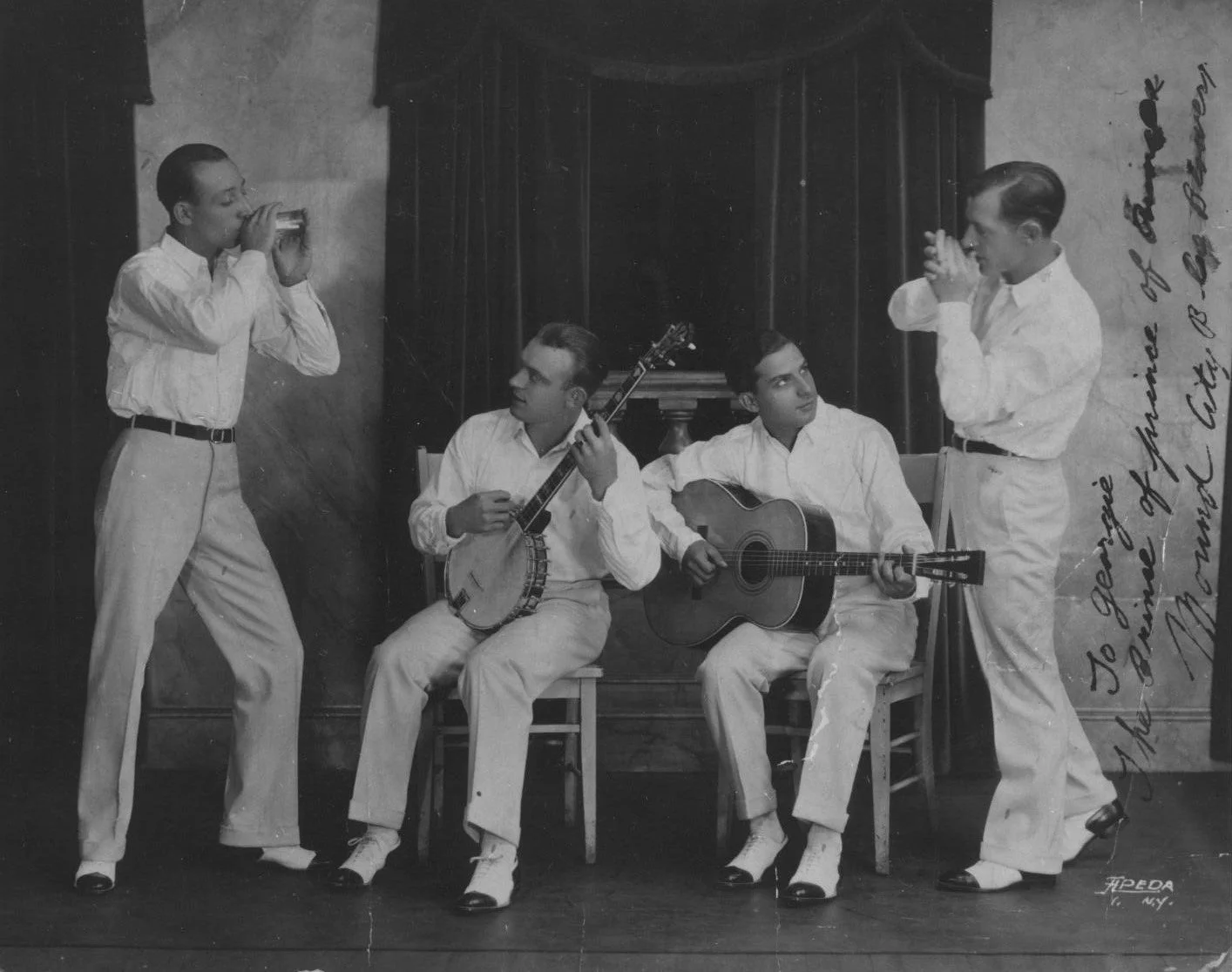
Mound City Blue Blowers, ca. fall, 1924. Apeda Studio, NYC.
Maybe once every month, he’d take some drinks. He didn’t like to drink because he had a bad stomach and was afraid he’d get ulcers.
The Mound City Blue Blowers finally broke up. McKenzie got rich, had a lot of money, and wanted to go to St. Louis. So Langie went with Venuti as a team. I was still with him every day for a while, but then he went with Bing Crosby, and he was with him at the end.
He died from an operation on his tonsils. He bled to death.
NOTE: Eddie Lang’s death certificate lists “pulmonary embolus” (blood clot) as a contributory to his death.
He had one of the biggest funerals ever held in Philadelphia. Joe Venuti was mad because Crosby got to ride in the first car, and he had to go in the second.
He was such a nice guy. All the guys in the pool hall liked him so much. I remember sometime after I’d first met him, we were playing pool in a small town for twenty dollars a game. I thought I was such a shark, but he could beat me so easy that the last shot he missed purposely so that I’d win, he didn’t want to take my money.
Of all the records he made, I like best the ones that he made with Bessie Smith.
SOURCES
Ted Gottsegen, Red Hot Jazz Archive.
Jeff Healey.
Jazz Record, No. 15, December 1943.
Mosaic Records, mosaicrecords.com.